 Spanish vs Portuguese
 Often partly understood across the border, especially on paper: roughly 6 in 10 everyday words look alike.
Spanish vs Italian
 Roughly half of everyday words look alike, and both are spoken with clear, open vowels.
Spanish vs French
 Shared Latin roots, but French spelling hides its sounds, so the two look closer on paper than they sound.
French vs ItalianItalian is spelled much as it sounds; French is not. Same Latin roots, very different spelling logic.
French vs PortugueseBoth keep nasal vowels and plenty of Latin vocabulary; about 3 in 10 everyday words look alike.
Italian vs PortugueseLatin cousins that sound surprisingly different aloud; roughly 4 in 10 everyday words still look alike.
 Japanese vs Korean
 Similar sentence order and particles, but two completely different writing systems.
Japanese vs Chinese
 They share many written characters, yet the spoken words rarely match.
 German vs Dutch
 Next-door neighbours: roughly 4 in 10 everyday words are alike, and Dutch comes out easier for English speakers.
Spanish vs GermanA Romance language set against a Germanic one, so only about 1 in 10 everyday words look alike.
French vs GermanFrench has two genders and no noun cases; German has three genders and four cases.
Korean vs ChineseHangul letters on one side, Chinese characters and tones on the other.
 Norwegian vs Swedish
 Speakers can often follow each other; roughly 7 in 10 everyday words look alike.
Norwegian vs Danish
 Nearly the same in writing, very different when spoken.
Swedish vs DanishClose on the page, with roughly 6 in 10 everyday words alike, but clearly different to the ear.
 Polish vs Ukrainian
 Both Slavic with seven cases, but one is written in Latin letters and the other in Cyrillic.
 Hebrew vs Arabic
 Related Semitic languages, both written right to left, in two different scripts.
 Hindi vs Bengali
 Scripts built on the same Brahmic logic, and roughly 4 in 10 everyday words are recognisably the same.
 Indonesian vs Tagalog
 Related Austronesian languages, yet only about 2 in 10 everyday words look alike.
 Thai vs Vietnamese
 Both are tonal, but Thai has its own script while Vietnamese uses Latin letters with accents.
 Finnish vs SwedishDifferent language families, so little carries over: about 1 in 10 everyday words look alike.
German vs SwedishGermanic cousins, but speakers do not follow each other the way Norwegian and Swedish speakers can.
German vs NorwegianNorwegian has none of the noun cases German keeps, and about 4 in 10 everyday words look alike.
Italian vs GermanItalian's open vowels meet German's three genders and four cases; about 2 in 10 words look alike.
Polish vs GermanBoth lean on noun cases, seven in Polish and four in German, but their words rarely resemble each other.
Spanish vs ChineseNo shared script, almost no shared words, and tones in Chinese that Spanish lacks.
 Turkish vs ArabicTurkish has used Latin letters since 1928 but borrowed many Arabic words; about 1 in 10 sound alike.
 Greek vs ItalianGreek has its own alphabet while Italian uses Latin letters; about 1 in 10 everyday words sound alike.
Greek vs TurkishUnrelated languages and centuries of neighbours, one in the Greek alphabet and one in Latin letters.
Turkish vs FinnishBoth attach endings to words instead of using small helper words, though they are not related.
 Czech vs PolishClose West Slavic neighbours with seven cases each, but Czech stresses the first syllable and Polish the second-to-last.
 Hungarian vs FinnishDistant Uralic relatives, both with vowel harmony and many cases, though their few shared words are hard to recognise.
 Russian vs UkrainianClose East Slavic relatives with much shared vocabulary but many false friends, and letters of their own: ы, э, ъ, ё in Russian; і, ї, є, ґ in Ukrainian.
 Romanian vs ItalianBoth descend from Latin and share much vocabulary, but Romanian has cases, puts the article at the end of the word and has many Slavic loanwords.
 Slovak vs CzechClose West Slavic relatives, largely mutually intelligible but with some false friends, and letters of their own: ä, ô, ĺ, ľ, ŕ in Slovak; ě, ř, ů in Czech.
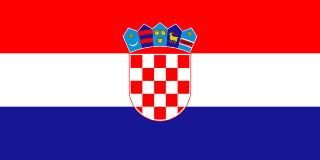 Croatian vs CzechSlavic languages in Latin script with č, š, ž, but Croatian is South Slavic and Czech West Slavic: far less mutually intelligible than Slovak and Czech. Only Croatian has ć, đ; only Czech has ě, ř, ů.

